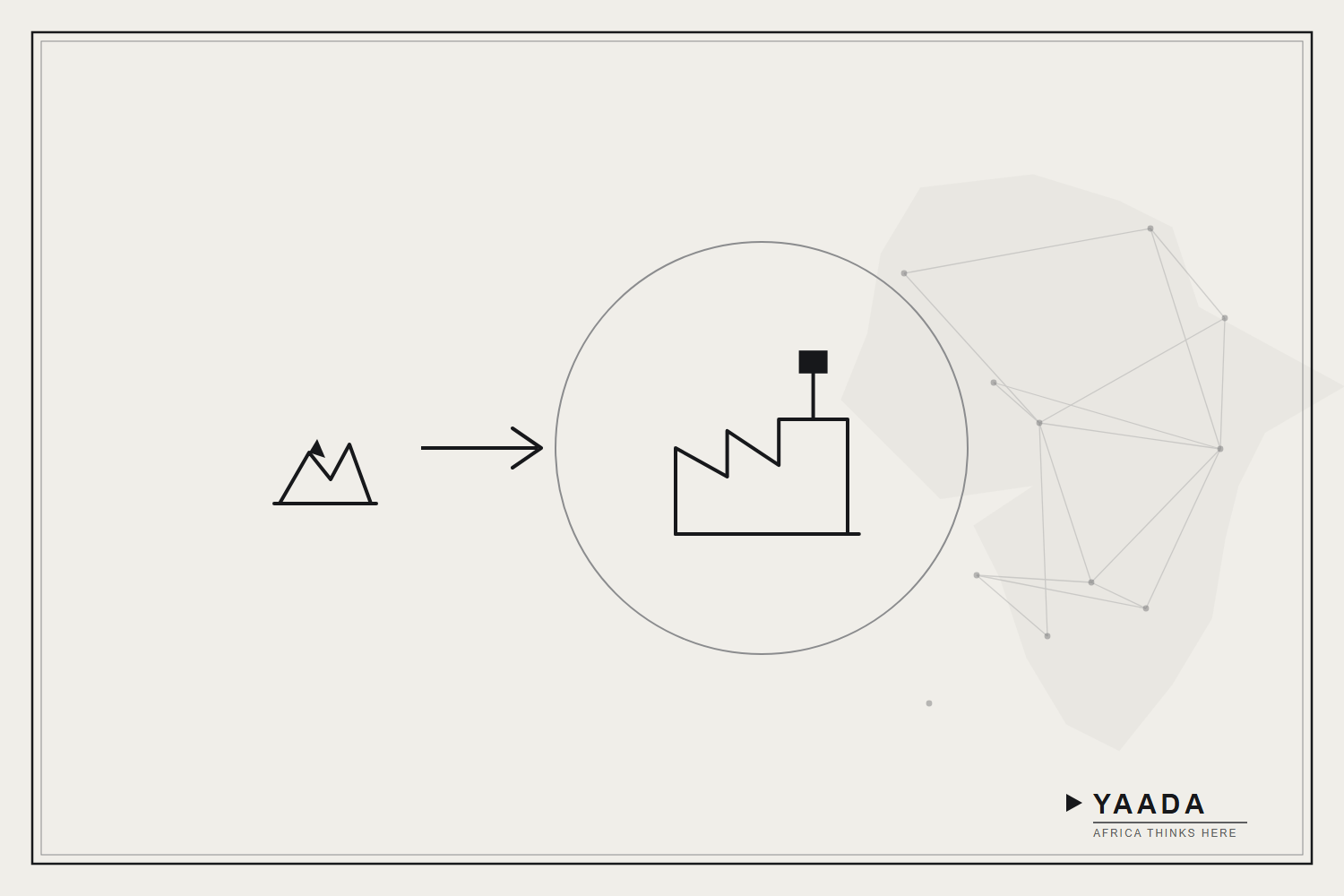
Ethiopia sits on substantial mineral endowments, yet much of the value in its rocks has historically left the country as raw or barely processed material, with the refining, shaping and margin captured somewhere downstream and abroad. India’s Rashmi Group is proposing to push a piece of that value chain onshore. Its US$235 million commitment in limestone and marble mining, announced through the Invest in Ethiopia 2026 pipeline, is less interesting as an extraction story than as a test of whether Ethiopia can keep more of what it digs up.
The Gap: Resources out, value lost
The structural problem with raw-mineral exports is well understood across the continent: the country that ships unprocessed stone captures the thinnest slice of its ultimate worth. Limestone feeds cement, steel and construction; marble becomes finished slabs and tiles that sell for many times the value of the block they were cut from. Processing is where the margin lives.
A US$235 million investment of this kind matters most if it brings processing capacity, not just pits. The difference between exporting marble blocks and exporting finished marble is the difference between a quarry economy and an industrial one.
The value is rarely in the rock. It is in what you do to it before it leaves.
The Constraint: Infrastructure and the licence to operate
Mining at scale runs on logistics. Heavy, low-value-per-tonne minerals like limestone are punishing to move, which means the economics live or die on roads, rail and reliable power to the mine gate. Where that infrastructure is thin, the cost of getting product to market can erase the margin that processing creates.
The second constraint is administrative. Licensing gaps — slow, unclear or inconsistent permitting — raise the perceived risk of large mineral commitments and can stall capital that is otherwise ready to deploy. For a project of this size, predictability in the permitting process is as valuable as the deposit itself. [TK on specific licensing status or infrastructure commitments tied to the Rashmi project.]
In mining, the deposit is fixed; the route to market is what gets negotiated.
The Cost: Environmental questions that do not go away
Extraction carries environmental weight that does not disappear because the cheque is large. Limestone and marble mining reshapes land, generates dust and waste, and draws on water and energy in ways that affect the communities nearest the operation. These are not footnotes; they are part of the project’s real cost and its social licence to keep operating.
Handled well, environmental and community management is a precondition for longevity rather than a compliance tax. Projects that treat it as the latter tend to discover the difference the hard way. The cheapest tonne to extract is not always the cheapest tonne to defend.
The Opening: A local supplier ecosystem
The most durable upside for Ethiopia may sit around the mine rather than inside it. A processing operation of this scale pulls in local suppliers — transport, maintenance, services, inputs — and a domestic supply of processed limestone and marble feeds Ethiopian cement and construction firms that currently rely on imports or unfinished material.
That is the import-substitution logic working in reverse and forwards at once: less reliance on imported processed minerals, and a cluster of local businesses growing alongside the anchor investment. For operators, the signal is to look at the procurement edges of a project like this, not only its headline tonnage.
For Ethiopia, the question Rashmi Group poses is simple and consequential: will the country export rock, or build the industry that turns rock into worth?
 WhatsApp for a Google-Ready Website