A banking system can look its healthiest at precisely the moment its risks are migrating somewhere harder to see. Ethiopia’s lenders are reporting cleaner books and fatter margins, even as the bulk of the country’s financial activity moves onto rails the old supervisory playbook was never written for. The National Bank of Ethiopia’s third Financial Stability Report captures both halves of that story, and the second half is the one that should hold an operator’s attention.
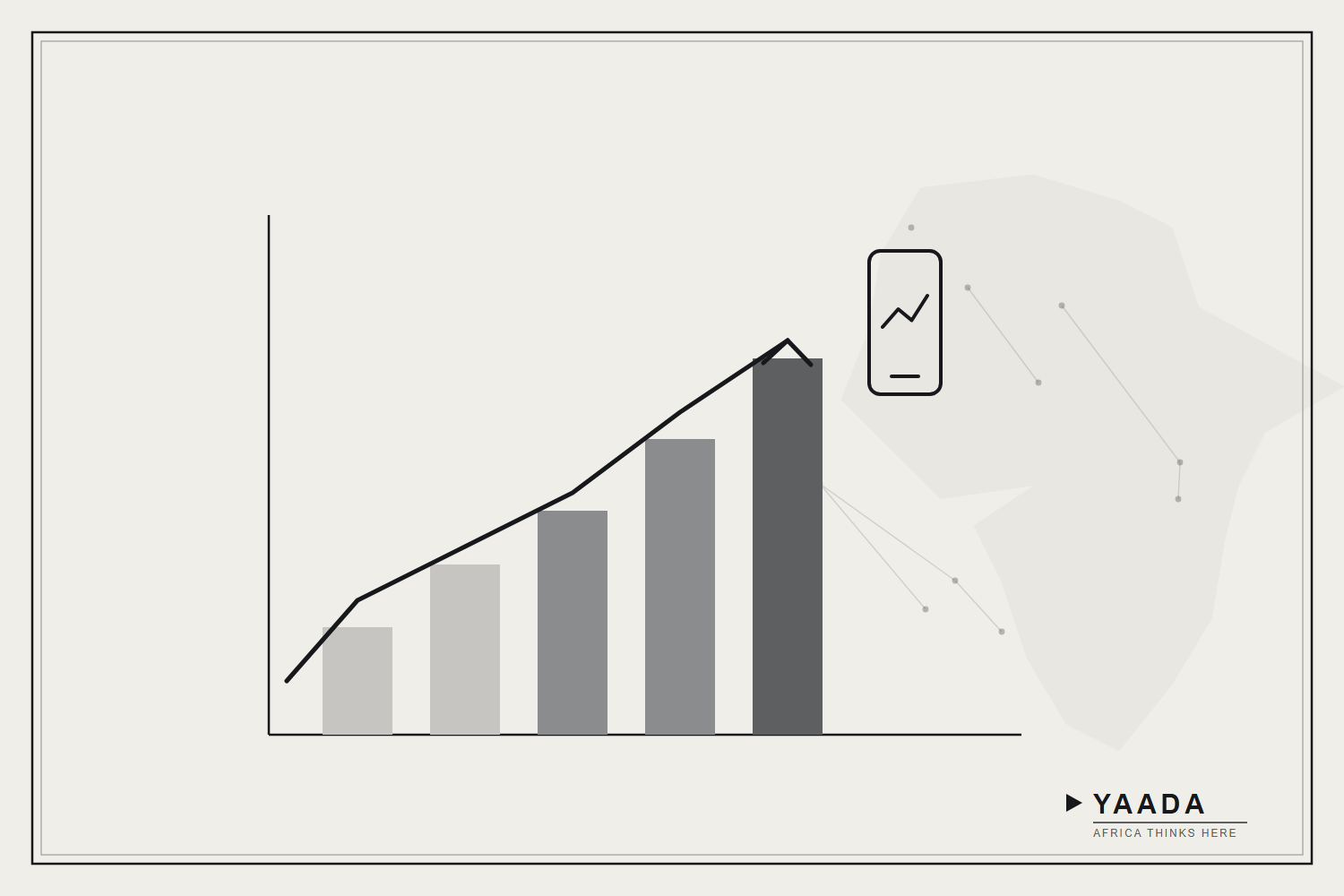
The headline number is the scale of the shift. Digital financial-services volumes doubled over the period to reach ETB 18.5 trillion, a figure that now dwarfs the formal economy most balance sheets were built to describe. That is not a marginal channel layered on top of branch banking. It is becoming the system.
The Balance Sheet: Healthier Than It Has Been
Start with the good news, because it is real. The ratio of non-performing loans across the system fell to 5.5 percent, a level that signals borrowers are servicing debt and that lenders’ provisioning is under control rather than spiralling. Profitability rose alongside it. For a banking sector that has spent recent years absorbing currency reform, tight liquidity and a difficult macro backdrop, a combination of falling bad loans and rising earnings is a genuine signal of resilience, not a cosmetic one.
The NBE frames this as the foundation that makes everything else possible. A system carrying lighter loan losses has more room to extend credit, more capital to absorb shocks, and more confidence to invest in the technology that is now reshaping it. Stability of the old kind buys the capacity to take on risk of a new kind.
A clean loan book is worth most when it funds the next set of problems rather than the last.
The Digital Surge: Where the Volume Went
The doubling to ETB 18.5 trillion in digital volumes is the structural event the report is really documenting. Mobile money, instant payments and digital wallets have moved from convenience to default for a large share of transactions, pulling millions of users and an enormous flow of value onto platforms that did not exist at this scale a few years ago.
For Addis Ababa’s merchants, for rural agents settling balances, for the salaried professional who no longer queues at a branch, this is the part of formalisation that actually feels like progress. It widens access, it leaves a data trail that can support lending, and it lowers the cost of moving money across a country where physical infrastructure has always been the constraint. The continental pattern, described in the NBE’s financial stability report, is that digital adoption tends to outrun the institutions meant to oversee it.
That is the catch hiding inside the convenience. Every transaction that leaves the branch also leaves the perimeter the supervisor spent decades fortifying.
Volume is not the same as control, and the two have just diverged sharply.
The New Risk Map: Operational and Cyber
The report is explicit about where the exposure now sits. As volumes concentrate on digital infrastructure, the dominant threats become operational and cyber rather than purely credit. An outage at a single payments processor, a breach of a wallet provider, or a sustained fraud campaign can now propagate through the system in ways a defaulting loan never could. The failure mode is no longer slow and visible on a balance sheet; it is fast, technical and often invisible until it is large.
This reorders the supervisory task. A regulator that has historically watched capital ratios and loan quality must now also watch uptime, encryption standards, third-party dependencies and the concentration risk that comes when most of the country’s transactions run through a handful of platforms. The skills, the data feeds and the response speed required are different in kind, not degree. The NBE’s own emphasis on strengthening technological infrastructure, human capacity and risk-management frameworks is an admission that the institution is racing to keep its oversight in step with the market it oversees.
For the operator, the practical reading is straightforward. The fragility worth pricing is no longer mainly whether a counterparty repays; it is whether the rail itself stays up. Treasury policy, vendor due diligence and contingency planning that assume the payments layer is a utility are assuming away the single biggest live risk in Ethiopian finance.
When the money moves at the speed of software, so does the failure.
The So-What: Build for the System You Now Have
The NBE’s report should be read as two messages held together. The first is reassurance: the banking core is in better shape than it has been, with bad loans down to 5.5 percent and profitability rising. The second is a warning that the centre of gravity has shifted, and the ETB 18.5 trillion now flowing through digital channels carries risks that older safeguards were not designed to catch.
For founders, treasurers and investors, the instruction is to stop treating digital finance as a feature and start treating it as the underlying system. That means diversifying payment providers rather than depending on one, asking hard questions about a platform’s security posture before integrating it, and building operational continuity around the assumption that the rail can fail. The institutions are adapting. The businesses that move first to harden their own exposure will be the ones still trading on the day a major platform has a bad hour.
 WhatsApp for a Google-Ready Website