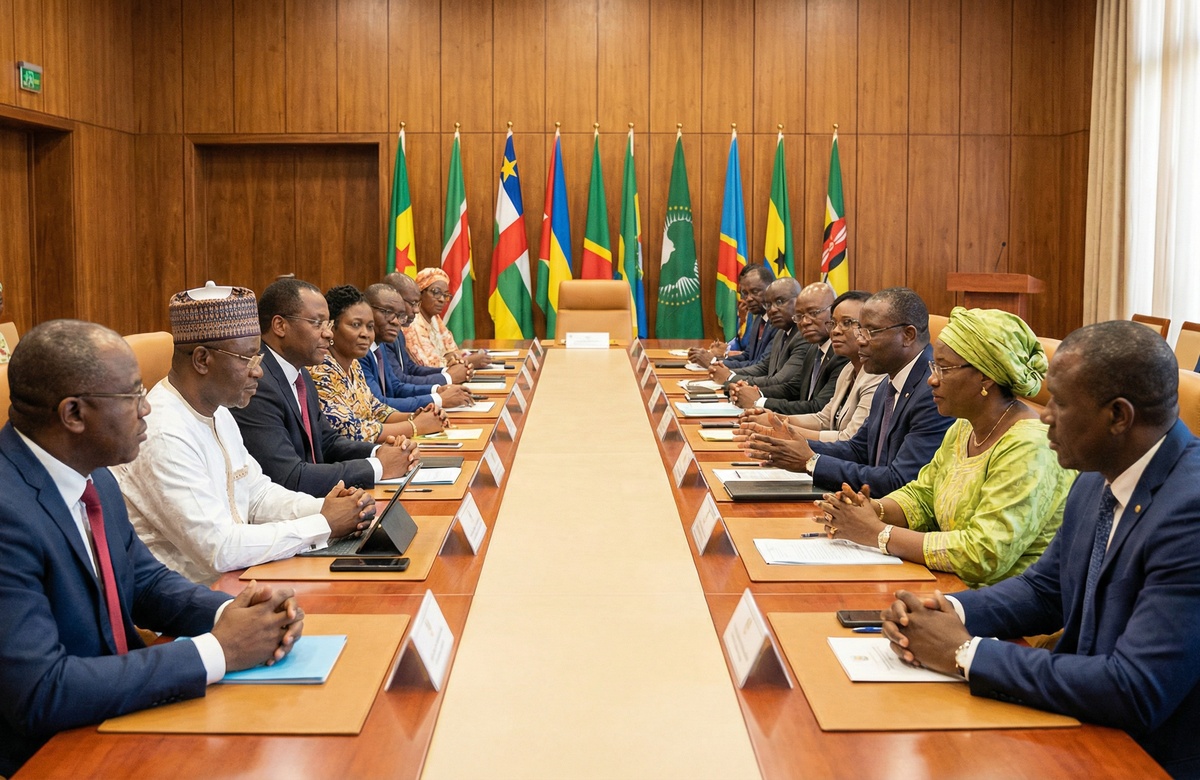
Effective governance plays a pivotal role in shaping regional trade agreements, which are essential for economic integration and growth in Central Africa. By fostering transparency, accountability, and infrastructure development, governance can either facilitate or hinder the success of such agreements. This article examines the impact of governance on regional trade in Central Africa, focusing on its role in addressing challenges and unlocking opportunities.
The Importance of Regional Trade Agreements
Regional trade agreements (RTAs) are designed to remove barriers such as tariffs, quotas, and customs delays, enabling member states to trade more efficiently. In Central Africa, agreements like the Economic Community of Central African States (ECCAS) and the Central African Economic and Monetary Community (CEMAC) aim to promote regional integration and boost intra-African trade.
By facilitating the free movement of goods, services, and capital, RTAs contribute to economic diversification, job creation, and poverty reduction. However, the effectiveness of these agreements depends largely on the quality of governance within member states.
Governance Factors Influencing Regional Trade
1. Policy Alignment and Coordination
Effective governance ensures that member states align their policies with the objectives of regional trade agreements. Coordinated customs procedures, harmonized tax policies, and unified trade regulations are critical for reducing bureaucratic inefficiencies and fostering seamless trade.
2. Infrastructure Development
Governance impacts the development and maintenance of infrastructure such as roads, railways, and ports, which are vital for facilitating trade. Poor governance often leads to delayed or poorly executed infrastructure projects, increasing costs and reducing competitiveness.
3. Transparency and Anti-Corruption Measures
Corruption at border checkpoints and within customs administrations creates bottlenecks that undermine regional trade agreements. Transparent governance systems ensure that trade flows are not disrupted by illicit practices.
4. Conflict Resolution Mechanisms
Governance frameworks that address disputes between member states or businesses ensure the stability needed for trade agreements to succeed. Institutions like the ECCAS Court of Justice play a critical role in resolving trade-related conflicts.
Challenges to Governance in Central Africa
Political Instability
Frequent political upheavals in some Central African countries create uncertainty, deterring investment and disrupting trade flows. Stable governance is necessary to build trust and foster collaboration among member states.
Weak Institutions
Underdeveloped governance institutions often lack the capacity to enforce trade policies or resolve disputes effectively. Strengthening these institutions is critical for the success of RTAs.
Inadequate Infrastructure
Governance failures in infrastructure planning and maintenance have left many Central African trade corridors underdeveloped. Poor road conditions, limited rail networks, and congested ports hinder trade efficiency.
Protectionist Policies
Despite agreements to promote free trade, some governments implement protectionist policies to safeguard domestic industries, undermining the objectives of regional integration.
Strategies for Strengthening Governance and Trade
Capacity Building for Institutions
Investing in the training and development of trade-related institutions ensures that they can implement and enforce policies effectively. This includes customs administrations, trade ministries, and dispute resolution bodies.
Promoting Public-Private Partnerships (PPPs)
Governance reforms that encourage PPPs can accelerate infrastructure development, with the private sector bringing efficiency and innovation to large-scale projects.
Enhancing Transparency
Digital platforms for customs clearance and trade documentation can reduce corruption and improve efficiency. For instance, implementing Single Window Systems enables traders to complete all regulatory requirements in one place.
Strengthening Regional Collaboration
Regular dialogue and joint initiatives among member states foster trust and alignment. Governance frameworks should prioritize collective problem-solving to address trade barriers and infrastructure gaps.
Opportunities for Growth
The African Continental Free Trade Area (AfCFTA) presents a unique opportunity for Central Africa to amplify its trade potential. By addressing governance challenges, member states can fully leverage this agreement to expand markets, attract investments, and boost economic resilience.
Conclusion: Governance as a Trade Enabler
Good governance is the backbone of successful regional trade agreements. For Central Africa, addressing challenges like political instability, corruption, and inadequate infrastructure is critical for unlocking the region’s trade potential. By prioritizing transparency, capacity building, and collaboration, governance can transform RTAs into powerful tools for economic growth and integration.
 WhatsApp for a Google-Ready Website