Ethiopia, often called the birthplace of coffee, offers a unique coffee tourism experience that blends history, culture, and flavor. As the country’s most iconic export, coffee has shaped Ethiopia’s identity and economy for centuries. Today, coffee tourism is flourishing, attracting visitors eager to explore the origins of this beloved beverage. This article delves into Ethiopia’s coffee tourism scene, highlighting key destinations, experiences, and its impact on the economy.
The Significance of Coffee in Ethiopia
Coffee, or “bunna” in Amharic, is deeply ingrained in Ethiopian culture. The story of coffee’s discovery begins in the Kaffa region, where legend credits a goat herder named Kaldi with identifying the energizing properties of coffee beans. Since then, coffee has become central to Ethiopian life, symbolizing hospitality and community through traditional coffee ceremonies.
Ethiopia is also one of the world’s largest coffee producers, known for its high-quality Arabica beans. Regions like Sidama, Yirgacheffe, and Harar are globally renowned for their unique coffee profiles, making them prime destinations for coffee enthusiasts.
Must-Visit Coffee Tourism Destinations
1. Kaffa: The Birthplace of Coffee
Kaffa is the heart of Ethiopia’s coffee heritage. Visitors can explore the Bonga Forest, home to wild coffee plants, and the Kaffa Coffee Museum, which offers insights into coffee’s origins and its journey to global fame. Guided tours of local farms provide hands-on experiences, from harvesting to roasting beans.
2. Yirgacheffe: A Coffee Connoisseur’s Haven
Yirgacheffe is celebrated for producing some of the world’s finest Arabica beans. Tourists can visit coffee cooperatives to learn about sustainable farming practices and sample freshly brewed coffee. The region’s picturesque landscapes, with lush hills and cascading waterfalls, enhance the experience.
3. Addis Ababa: Coffee Culture in the Capital
Addis Ababa is home to iconic coffeehouses like Tomoca Coffee and Kaldi’s Coffee, where visitors can taste a variety of traditional and modern brews. The National Museum of Ethiopia also features exhibits on coffee’s cultural significance.
4. Sidama: Coffee and Community
Sidama offers immersive experiences, including visits to smallholder farms and community-led coffee projects. The annual Sidama Coffee Festival showcases the region’s rich coffee culture through tastings, music, and storytelling.
The Coffee Ceremony: A Cultural Highlight
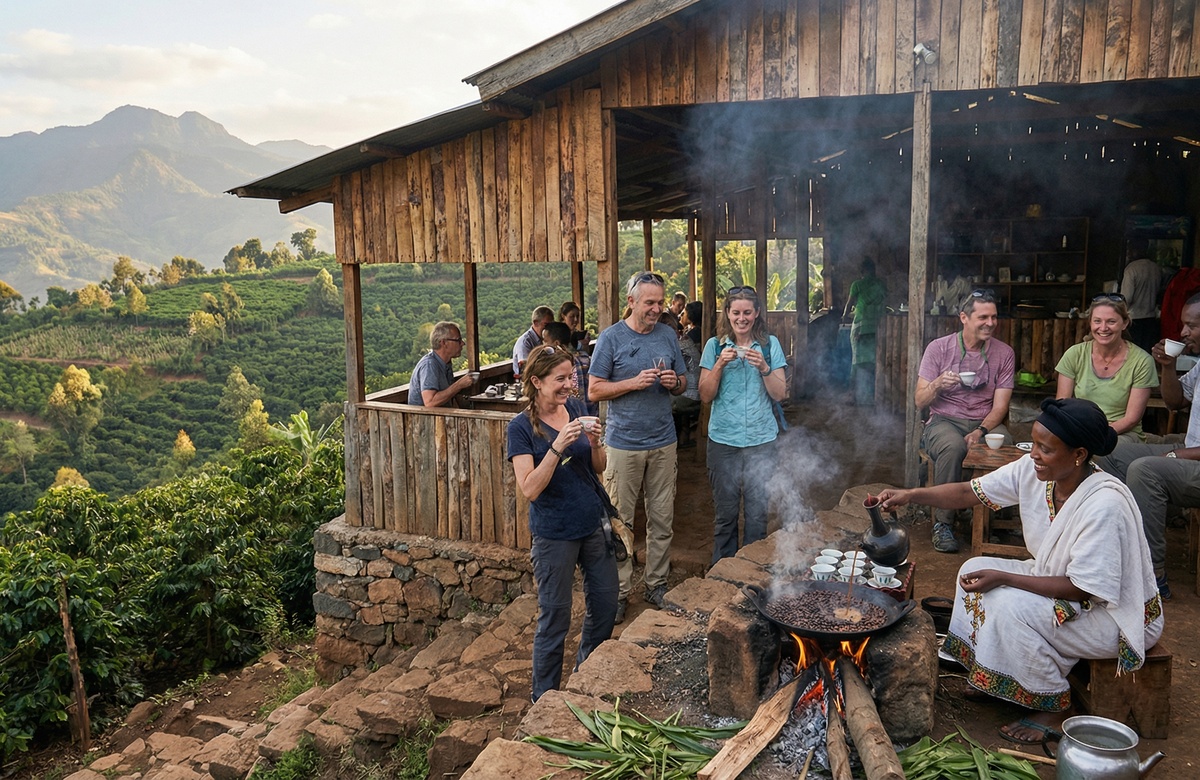
No visit to Ethiopia is complete without participating in a traditional coffee ceremony. This elaborate ritual involves roasting green coffee beans over an open flame, grinding them, and brewing the coffee in a clay pot called a jebena. Served with snacks like popcorn or roasted barley, the ceremony is a symbol of friendship and respect, providing a deep connection to Ethiopian culture.
Economic and Social Impact of Coffee Tourism
Supporting Local Communities
Coffee tourism creates opportunities for smallholder farmers, cooperatives, and artisans to showcase their products and generate income. Farm-to-table experiences and coffee tastings allow tourists to support local businesses directly.
Promoting Sustainability
Many coffee farms emphasize sustainable practices, such as organic cultivation and shade-grown coffee. These initiatives preserve biodiversity while ensuring high-quality yields.
Strengthening Ethiopia’s Global Brand
Coffee tourism positions Ethiopia as a premium coffee destination, enhancing its reputation in global markets. Events like the Ethiopian Coffee Expo attract international buyers, boosting exports and investments.
Challenges in Coffee Tourism Development
Infrastructure Gaps
Limited transport and accommodation options in rural coffee-growing regions can hinder accessibility for tourists.
Climate Change
Rising temperatures and unpredictable weather patterns threaten coffee yields, affecting the long-term viability of coffee tourism.
Awareness and Promotion
While Ethiopia’s coffee heritage is well-known, the country’s tourism marketing efforts often overlook coffee as a key attraction.
Strategies to Boost Coffee Tourism
Investing in Infrastructure
Developing roads, eco-lodges, and visitor centers in coffee regions will enhance the tourism experience and attract more visitors.
Strengthening Marketing Efforts
Promoting Ethiopia’s coffee tourism through social media, international expos, and partnerships with travel agencies can increase global awareness.
Empowering Local Communities
Training programs for farmers, guides, and hospitality workers ensure high-quality services while empowering locals to benefit from tourism.
Enhancing Sustainability
Encouraging eco-friendly tourism practices, such as waste reduction and renewable energy use, aligns with global trends and attracts environmentally conscious travelers.
The Future of Coffee Tourism in Ethiopia
Ethiopia’s coffee tourism sector is brimming with potential. By preserving its rich coffee heritage, improving infrastructure, and embracing sustainable practices, the country can attract a growing number of coffee enthusiasts. As more people seek meaningful travel experiences, Ethiopia’s coffee tourism offers a perfect blend of culture, history, and flavor.
Conclusion: Savoring Ethiopia’s Coffee Story
Coffee tourism in Ethiopia is more than just tasting exceptional brews—it’s a journey into the heart of Ethiopian culture and history. From the wild forests of Kaffa to the bustling cafes of Addis Ababa, Ethiopia invites visitors to experience the story of coffee in its truest form. Whether you’re a coffee connoisseur or a curious traveler, Ethiopia’s coffee tourism scene promises an unforgettable adventure.
 WhatsApp for a Google-Ready Website