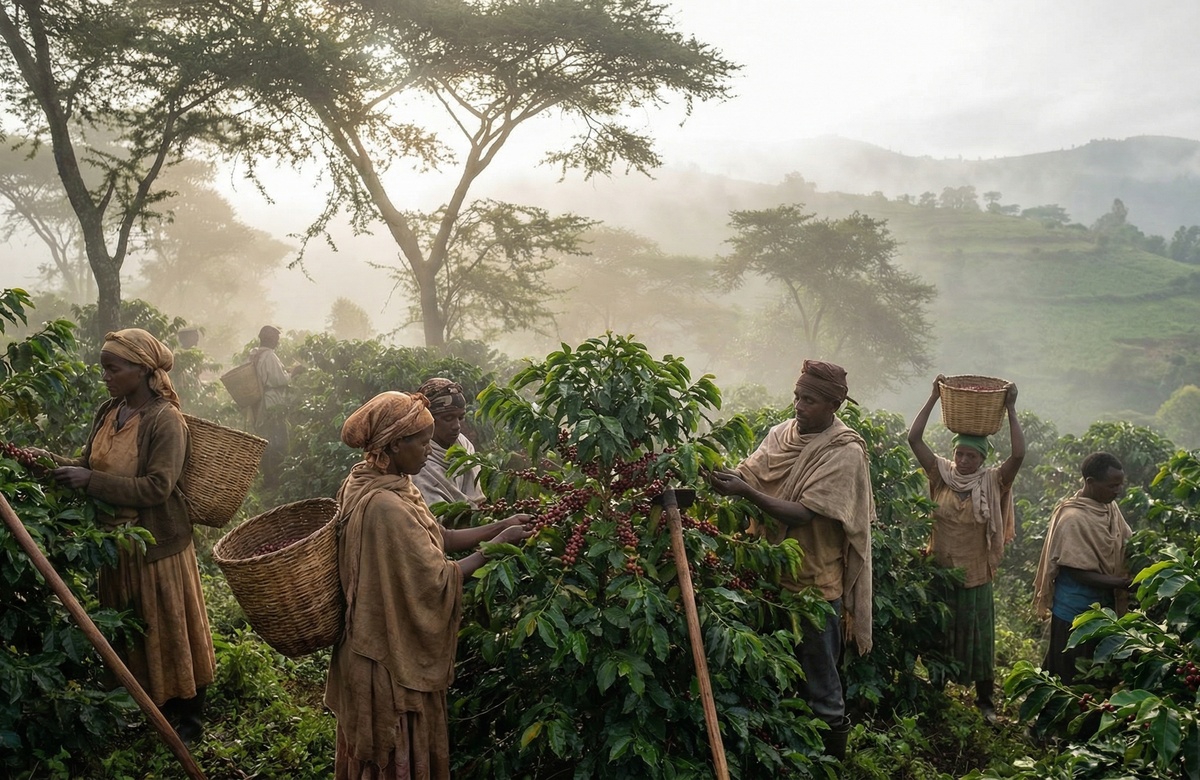
Coffee is not just a beverage in Ethiopia; it’s a cultural symbol and a cornerstone of the country’s economy. Known as the birthplace of coffee, Ethiopia remains a global leader in coffee production, contributing significantly to its GDP, employment, and export revenue. This article explores how coffee farming shapes Ethiopia’s economy and the lives of millions.
Coffee: Ethiopia’s Economic Backbone
Ethiopia produces some of the world’s finest coffee, including the renowned Arabica beans. The coffee industry contributes nearly 30% of the country’s export earnings, making it a critical sector for economic stability. Smallholder farmers, who make up over 90% of coffee producers, are central to this success. Their efforts ensure Ethiopia remains competitive in the global coffee market.
Job Creation and Livelihoods
The coffee industry supports the livelihoods of over 15 million Ethiopians, spanning farmers, traders, and workers in the value chain. From cultivation to processing, coffee farming generates employment opportunities across rural areas, reducing poverty and improving community welfare. The sector also empowers women, with many involved in harvesting and trading.
Challenges in Coffee Farming
Despite its significance, Ethiopia’s coffee industry faces challenges. Climate change threatens coffee yields by altering growing conditions. Rising temperatures and irregular rainfall patterns affect bean quality and production volumes. Additionally, limited access to global markets due to inadequate infrastructure and fluctuating international coffee prices pose risks to smallholder farmers.
Innovations in Coffee Farming
To address these challenges, Ethiopian farmers are adopting innovative practices. Climate-resilient farming techniques, such as shade-grown coffee and intercropping, mitigate the effects of climate change. Additionally, investments in modern processing facilities improve coffee quality and market competitiveness. Programs like Ethiopian Commodity Exchange (ECX) help farmers connect directly with buyers, ensuring fair prices.
Global Recognition and Future Prospects
Ethiopian coffee enjoys worldwide recognition, with brands leveraging its unique flavors and heritage to penetrate international markets. Initiatives to promote Ethiopian coffee on global platforms are yielding results, with increased demand for specialty coffee. By supporting farmers through training, technology, and market access, Ethiopia can sustain its dominance in the global coffee industry.
Conclusion: Brewing Economic Growth
Coffee farming is more than an economic activity in Ethiopia; it’s a lifeline for millions. By addressing challenges and embracing innovation, the industry holds immense potential to drive sustainable development and uplift rural communities. With continued support, Ethiopia’s coffee sector will remain a beacon of economic transformation.
 WhatsApp for a Google-Ready Website