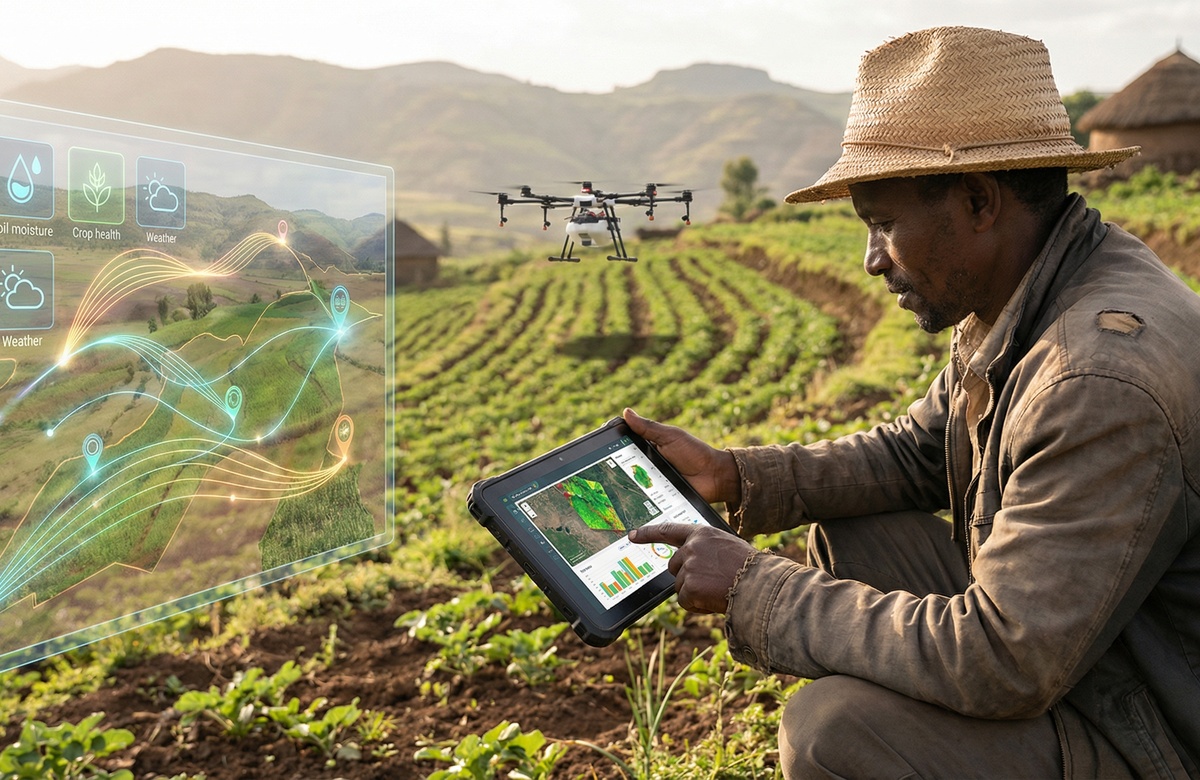
Artificial Intelligence (AI) is transforming agriculture in Ethiopia, addressing challenges such as climate change, resource scarcity, and inefficient farming practices. By leveraging AI-driven tools and technologies, farmers are optimizing production, reducing waste, and increasing profitability. This article explores how AI is revolutionizing Ethiopian agriculture and its potential to enhance food security and economic growth.
Agriculture in Ethiopia: A Sector Ready for Innovation
Agriculture accounts for over 30% of Ethiopia’s GDP and employs approximately 70% of the population. However, the sector faces critical challenges, including unpredictable weather patterns, soil degradation, and limited access to modern farming techniques. These issues have made traditional farming methods less effective in meeting the growing demand for food.
AI is stepping in to address these gaps by providing data-driven solutions that empower farmers with actionable insights, making agriculture more sustainable and efficient.
Applications of AI in Ethiopian Agriculture
1. Precision Farming
AI-powered precision farming tools use sensors, drones, and satellite imagery to monitor soil conditions, crop health, and water levels. For instance, Ethiopian farmers are adopting platforms that analyze soil data to recommend optimal planting schedules and fertilizer use, significantly improving yields.
2. Weather Forecasting and Climate Adaptation
AI models analyze historical and real-time weather data to provide accurate forecasts. These predictions help farmers plan their activities, from sowing to harvesting, reducing losses caused by sudden weather changes.
3. Pest and Disease Management
AI tools can identify crop diseases and pests through image recognition technology. By uploading pictures of affected crops, farmers receive instant diagnoses and treatment recommendations, minimizing crop damage and improving productivity.
4. Supply Chain Optimization
AI-driven platforms streamline supply chains by predicting market demand and optimizing logistics. Farmers can use these tools to determine the best times to harvest and transport their produce, ensuring maximum profitability.
Benefits of AI for Ethiopian Farmers
Increased Productivity
AI tools enable farmers to make informed decisions, reducing inefficiencies and boosting crop yields. With precise data, resources like water, fertilizer, and pesticides are used more effectively.
Cost Savings
By minimizing waste and optimizing resource use, AI reduces production costs for farmers. Predictive analytics also help farmers avoid unnecessary expenditures on overstocked supplies or poorly timed planting.
Enhanced Food Security
AI-driven solutions improve the quality and quantity of agricultural output, contributing to national food security. This is critical in a country where population growth continues to drive up food demand.
Challenges to AI Adoption in Agriculture
Despite its potential, AI adoption in Ethiopian agriculture faces several barriers:
Limited Connectivity: Rural areas often lack the internet access required to support AI tools and platforms.
High Costs: Advanced AI technologies can be expensive, putting them out of reach for many smallholder farmers.
Digital Literacy: Farmers need training to understand and effectively use AI-driven solutions.
Strategies for Overcoming Challenges
Expanding Internet Access
Investments in rural broadband infrastructure can increase connectivity, making AI tools more accessible to farmers in remote areas.
Affordable AI Solutions
Governments and private sector partners can subsidize AI technologies or develop low-cost solutions tailored to smallholder farmers.
Training and Education
Public and private organizations must collaborate to provide digital literacy programs, equipping farmers with the skills needed to adopt and maximize AI tools.
The Future of AI in Ethiopian Agriculture
The integration of AI into Ethiopian agriculture is just beginning, but its potential is immense. As technologies become more affordable and accessible, AI could revolutionize farming practices across the country, boosting productivity, sustainability, and resilience to climate change.
Conclusion: A Smart Future for Ethiopian Farming
AI is transforming the agricultural landscape in Ethiopia, offering innovative solutions to longstanding challenges. By addressing barriers to adoption and scaling up successful initiatives, Ethiopia can unlock the full potential of AI to enhance its agricultural sector, ensuring a sustainable and prosperous future for its farmers.
 WhatsApp for a Google-Ready Website