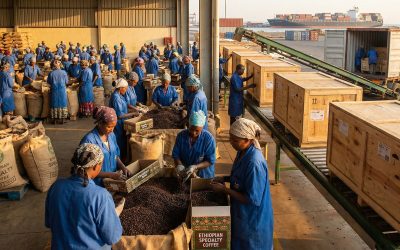
The African Continental Free Trade Area (AfCFTA) represents a transformative opportunity for Chad and Ethiopia to enhance economic collaboration, boost exports, and foster sustainable development. By eliminating tariffs, harmonizing trade policies, and creating a unified market, AfCFTA paves the way for these nations to integrate more effectively into regional and global value chains. This article explores how Chad and Ethiopia can leverage AfCFTA to maximize economic growth and overcome existing trade barriers.
Understanding the AfCFTA and Its Objectives
AfCFTA is the world’s largest free trade area by member states, encompassing 55 African Union countries and a market of over 1.3 billion people. Its primary objectives are to:
Boost intra-African trade by reducing tariffs by up to 90%.
Facilitate the free movement of goods, services, and investments.
Enhance industrialization and economic diversification.
Promote sustainable and inclusive growth across the continent.
For Chad and Ethiopia, landlocked countries heavily reliant on imports, AfCFTA offers opportunities to reduce trade costs, access larger markets, and develop their manufacturing and service sectors.
Opportunities for Chad and Ethiopia Under AfCFTA
1. Expanding Export Markets
Ethiopia’s agricultural products, such as coffee and spices, and Chad’s livestock and cotton have significant potential in African markets. By removing tariffs, AfCFTA makes it easier for these goods to reach new destinations at competitive prices.
2. Developing Regional Value Chains
Chad and Ethiopia can collaborate with neighboring countries to create regional value chains, particularly in textiles, agriculture, and renewable energy. For example, Ethiopia’s industrial parks and Chad’s raw materials can combine to produce value-added goods for export.
3. Attracting Investments
AfCFTA’s unified market reduces perceived risks for investors, making Chad and Ethiopia attractive destinations for foreign direct investment (FDI) in infrastructure, manufacturing, and technology.
4. Enhancing Infrastructure Connectivity
AfCFTA encourages regional infrastructure projects, such as railways, highways, and energy grids, which are critical for improving trade logistics in Chad and Ethiopia.
5. Digital Trade Opportunities
Both nations can harness AfCFTA’s emphasis on e-commerce and digital trade to expand their online marketplaces and integrate small and medium enterprises (SMEs) into global supply chains.
Challenges in Implementing AfCFTA for Chad and Ethiopia
Limited Infrastructure
Poor transport networks and energy deficits in Chad and Ethiopia increase trade costs and limit their competitiveness in regional markets.
Weak Institutional Capacity
Bureaucratic inefficiencies and limited institutional capacity to enforce trade agreements can slow down AfCFTA implementation.
Non-Tariff Barriers
Despite tariff reductions, non-tariff barriers like complex customs procedures, standards, and regulations remain obstacles to seamless trade.
Low Industrial Base
Both countries rely heavily on raw material exports and face challenges in scaling up industrialization to produce value-added goods.
Strategies for Maximizing AfCFTA Benefits
1. Investing in Infrastructure
Regional infrastructure projects, such as the Addis Ababa-Djibouti Railway and Chad’s Trans-Saharan Highway, are crucial for improving connectivity and trade efficiency. Governments and private sectors must collaborate to develop more such projects.
2. Strengthening Trade Policies
Simplifying customs procedures and harmonizing standards with AfCFTA regulations will ensure smoother trade flows across borders.
3. Promoting Industrialization
Developing industrial parks and special economic zones (SEZs) can help Chad and Ethiopia process raw materials locally, adding value to exports.
4. Supporting SMEs
Providing financial and technical support to SMEs will enable them to compete in regional markets and integrate into value chains.
5. Enhancing Regional Collaboration
Chad and Ethiopia can work with regional blocs, such as the East African Community (EAC) and Economic Community of Central African States (ECCAS), to align policies and promote collective trade initiatives.
Case Studies: Leveraging AfCFTA Success Stories
Ethiopia’s Export-Led Growth
Ethiopia’s industrial parks, like Hawassa Industrial Park, have successfully attracted FDI and boosted textile exports. Leveraging AfCFTA can expand access to African markets, reducing dependency on the US and Europe.
Chad’s Livestock Trade
Chad’s livestock sector, a key contributor to its economy, can benefit from streamlined cross-border trade under AfCFTA. With better transport links, Chad can increase its livestock exports to West and Central Africa.
The Future of Chad and Ethiopia Under AfCFTA
By fully embracing AfCFTA, Chad and Ethiopia can unlock new growth opportunities and overcome the challenges of being landlocked economies. The agreement provides a framework for regional collaboration, enabling both nations to diversify their economies and build resilience against external shocks.
With strategic investments, supportive policies, and a commitment to regional integration, Chad and Ethiopia can emerge as key players in Africa’s economic transformation.
Conclusion: A Pathway to Prosperity
AfCFTA is more than a trade agreement—it is a roadmap for economic empowerment and sustainable development. For Chad and Ethiopia, leveraging this opportunity requires bold reforms, collaboration, and a focus on building capacity. By doing so, these nations can turn trade into a powerful tool for transforming lives and creating a prosperous future.
 WhatsApp for a Google-Ready Website