Artists across North Africa are preserving and promoting the region’s rich cultural heritage through their creative expressions. By blending traditional elements with contemporary art forms, these cultural ambassadors are sharing North Africa’s stories with the world while fostering pride in local identities. This article highlights influential artists who are preserving heritage, the impact of their work, and the growing global appreciation for North African art.
Noureddine Chater: Celebrating Moroccan Calligraphy
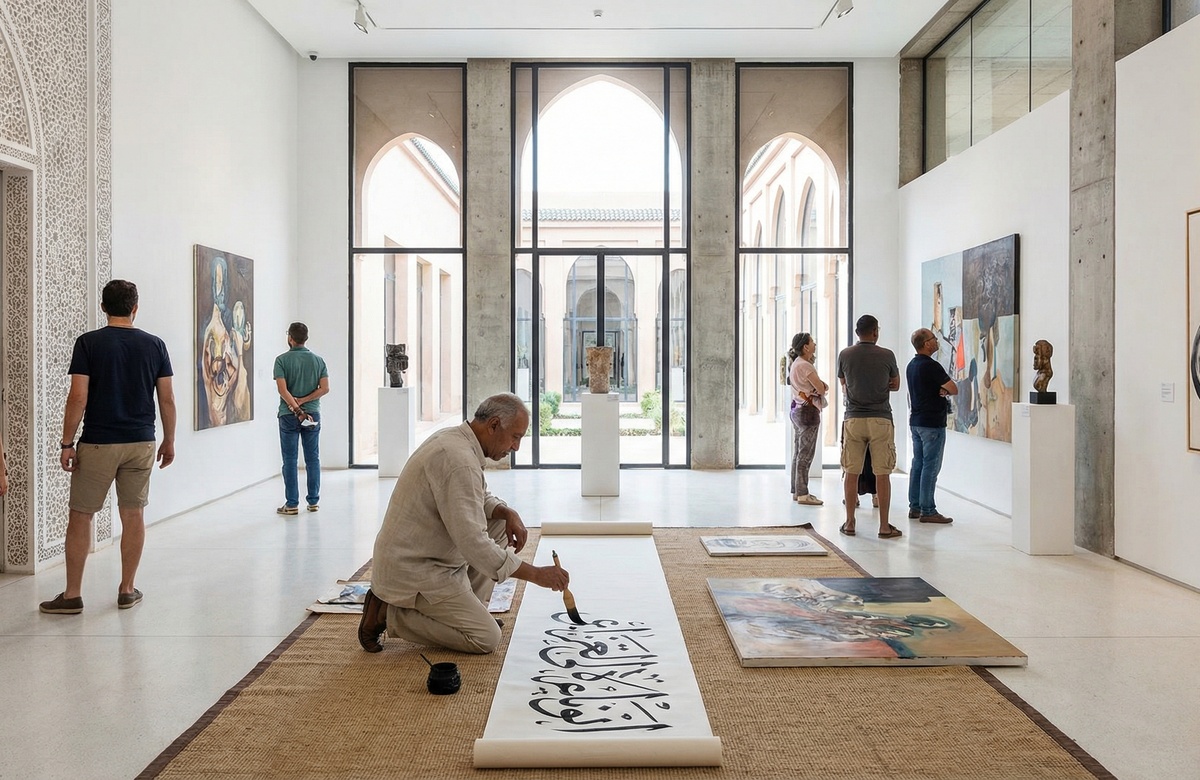
Noureddine Chater, a renowned Moroccan calligrapher, has elevated the art of Arabic calligraphy by merging traditional techniques with modern design. His work incorporates elements of Amazigh and Islamic art, creating pieces that resonate with audiences across cultures. Chater’s exhibitions have traveled internationally, introducing Moroccan calligraphy to new audiences and showcasing the depth of the country’s artistic traditions.
Through workshops and mentorship programs, Chater also ensures that younger generations learn and preserve the art of calligraphy, fostering a lasting legacy.
Abdelkader Benchamma: Bridging Tradition and Contemporary Art
Abdelkader Benchamma, an Algerian artist based in France, uses his work to explore themes of identity, memory, and heritage. His intricate ink drawings and installations are inspired by North African patterns and cultural narratives, creating a dialogue between tradition and modernity.
Benchamma’s art has been showcased in prestigious galleries worldwide, including the Centre Pompidou in Paris. His success highlights the global relevance of North African heritage and its influence on contemporary art.
Fatma Charfi: Preserving Tunisian Folklore
Fatma Charfi, a Tunisian multidisciplinary artist, draws inspiration from traditional Tunisian folklore and crafts. Her work incorporates materials such as textiles and ceramics, reinterpreting folk stories and rituals in a modern context. Charfi’s art not only preserves Tunisia’s cultural heritage but also challenges societal norms, addressing issues such as gender roles and environmental sustainability.
Her dedication to cultural preservation extends to community projects, where she collaborates with local artisans to promote traditional crafts and create sustainable livelihoods.
Mohamed Abla: Showcasing Egyptian Life Through Art
Mohamed Abla, one of Egypt’s most celebrated contemporary artists, captures the essence of Egyptian life through his vibrant paintings. His work often depicts scenes from rural villages, bustling cities, and historic landmarks, providing a visual narrative of Egypt’s cultural diversity.
Abla is also the founder of the Fayoum Art Center, which serves as a hub for artists and cultural enthusiasts. The center’s workshops and exhibitions celebrate Egypt’s artistic heritage while fostering creativity and collaboration.
Safaa Erruas: Minimalism and Moroccan Identity
Safaa Erruas, a Moroccan artist known for her minimalist installations, uses her work to reflect on themes of identity, memory, and cultural belonging. Her pieces often feature delicate materials such as paper, cotton, and thread, symbolizing fragility and resilience.
Erruas’s art is deeply rooted in Moroccan culture, drawing inspiration from traditional symbols and practices. Her exhibitions have been widely acclaimed, contributing to the global recognition of Moroccan contemporary art.
The Impact of Cultural Ambassadors
These artists play a vital role in preserving and promoting North African heritage, ensuring that its rich traditions remain relevant in a rapidly changing world. Their work fosters cultural pride, inspires new generations of creatives, and strengthens the region’s identity on a global stage.
Beyond their artistic achievements, these cultural ambassadors contribute to socio-economic development by supporting local artisans, creating jobs, and attracting tourism. Their efforts highlight the importance of culture as both a source of inspiration and a driver of sustainable development.
The Future of North African Art
As global interest in North African art continues to grow, the region’s artists have an opportunity to further elevate their heritage on the world stage. Investments in cultural education, infrastructure, and international collaborations will be crucial for nurturing talent and expanding the reach of North African art.
By celebrating their heritage and embracing innovation, these cultural ambassadors are not only preserving the past but also shaping a vibrant future for North African art.
 WhatsApp for a Google-Ready Website