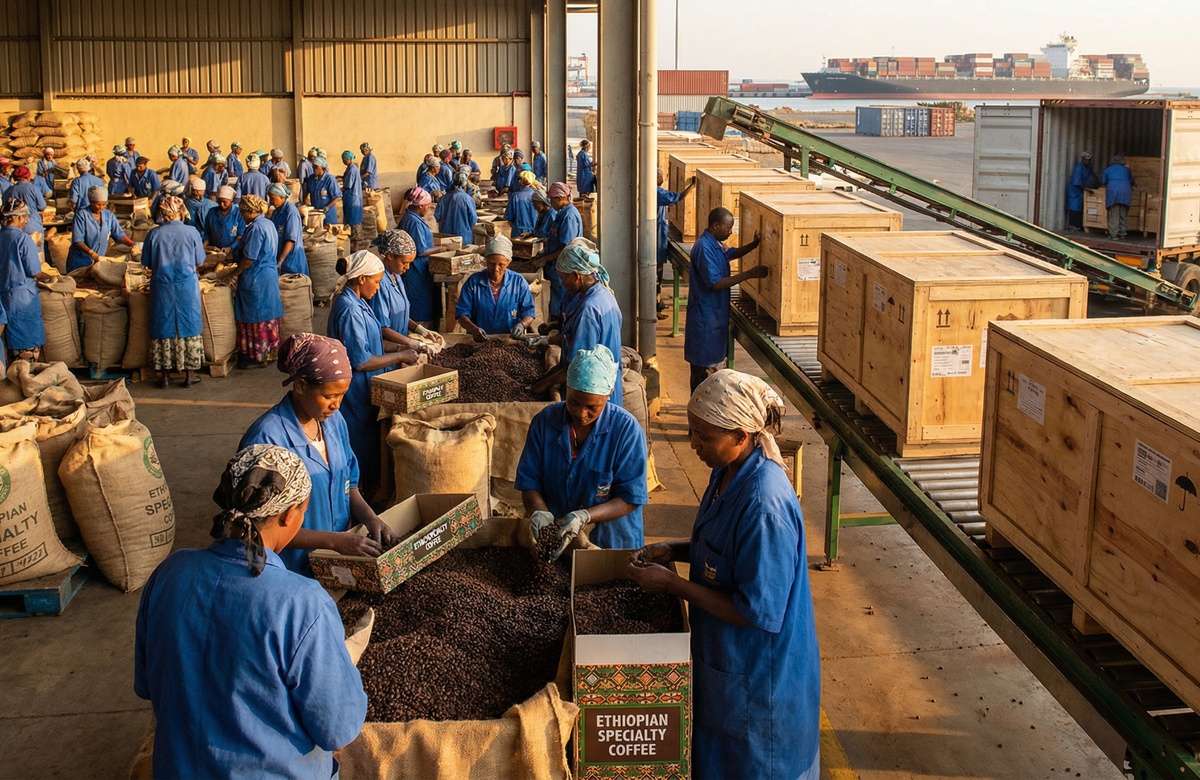
Ethiopia is globally recognized as the birthplace of coffee, producing some of the world’s most sought-after beans. With a vibrant coffee culture and diverse flavor profiles, Ethiopian coffee holds significant potential in the global market. This article explores the opportunities and challenges of exporting Ethiopian coffee, highlighting strategies to maximize its impact on the economy and position Ethiopia as a leader in the coffee trade.
The Significance of Coffee in Ethiopia
Coffee is deeply embedded in Ethiopian culture and economy. It accounts for 30% of the country’s export revenue and provides livelihoods for millions of smallholder farmers. Renowned varieties such as Yirgacheffe, Sidamo, and Harar have gained international acclaim for their unique flavors and quality.
The global demand for specialty coffee continues to grow, offering Ethiopian producers the opportunity to capture premium markets and enhance profitability.
Opportunities in the Global Coffee Market
1. Rising Demand for Specialty Coffee
The specialty coffee market, valued at over $35 billion globally, is expanding as consumers seek high-quality, ethically sourced beans. Ethiopian coffee’s distinct profiles position it as a favorite among coffee connoisseurs.
2. Certification and Traceability
International certifications, such as Fair Trade and Organic, increase consumer confidence and demand. Ethiopia’s Coffee and Tea Authority has made strides in implementing traceability systems that allow buyers to verify the origin of beans.
3. Diaspora and International Appeal
The Ethiopian diaspora plays a crucial role in promoting Ethiopian coffee globally, often introducing it to new markets. Events like the Ethiopian Coffee Expo further enhance visibility.
4. Value-Added Exports
Investing in roasting, packaging, and branding within Ethiopia enables exporters to capture more value before shipping coffee overseas. This approach reduces reliance on raw bean exports and enhances profitability.
Challenges in Exporting Ethiopian Coffee
1. Infrastructure Gaps
Poor road networks, limited warehousing facilities, and inefficient port systems increase logistical costs and delays, affecting export competitiveness.
2. Climate Change
Unpredictable weather patterns threaten coffee yields and quality, requiring adaptation strategies to ensure sustainability.
3. Market Access Barriers
High tariffs and non-tariff barriers in some regions complicate Ethiopia’s access to key global markets.
4. Limited Access to Finance
Smallholder farmers and cooperatives often struggle to secure funding for equipment, training, and certification, limiting their ability to meet international standards.
Strategies to Boost Coffee Exports
1. Strengthening Cooperatives
Organizing smallholder farmers into cooperatives enhances bargaining power, enables resource sharing, and ensures consistent quality. Successful cooperatives like Oromia Coffee Farmers Cooperative Union (OCFCU) serve as models.
2. Promoting Ethiopian Coffee Brands
Marketing campaigns that highlight Ethiopian coffee’s heritage, flavor diversity, and ethical sourcing can increase global demand. Platforms like Ethiopian Airlines’ Coffee Corner have already showcased Ethiopia’s coffee culture internationally.
3. Expanding Market Access
Negotiating trade agreements and leveraging the African Continental Free Trade Area (AfCFTA) can reduce export costs and open new markets within Africa and beyond.
4. Climate Resilience Programs
Investing in climate-smart agricultural practices, such as shade-growing and drought-resistant coffee varieties, ensures sustainable production amid changing climates.
5. Enhancing Digital Platforms
E-commerce platforms, like Bean Voyage and Farmers Direct, can connect Ethiopian coffee producers with global buyers, bypassing intermediaries and increasing profits.
Case Study: Yirgacheffe’s Global Success
Yirgacheffe coffee, known for its floral and citrusy notes, has become a symbol of Ethiopia’s coffee excellence. By focusing on quality control, branding, and certifications, Yirgacheffe producers have secured premium prices in international markets. Their success highlights the potential of combining traditional practices with modern marketing.
The Economic Impact of Coffee Exports
Job Creation
Coffee exports support over 15 million Ethiopians, from farmers to logistics workers. Expanding export markets will increase employment opportunities across the value chain.
Revenue Growth
Higher export volumes and premium pricing enhance Ethiopia’s foreign exchange earnings, contributing to economic stability and development.
Community Empowerment
By empowering smallholder farmers with resources and training, coffee exports uplift rural communities and reduce poverty.
The Future of Ethiopian Coffee Exports
Ethiopia’s coffee industry is poised for significant growth, with increasing global recognition of its premium products. By addressing logistical challenges, adopting sustainable practices, and investing in value addition, Ethiopia can enhance its position as a leading coffee exporter. Collaboration between the government, private sector, and international partners will be key to realizing this potential.
Conclusion: Brewing Success on a Global Scale
Ethiopia’s coffee heritage is unmatched, and its potential in the global market is vast. By embracing innovation, sustainability, and strategic branding, Ethiopian coffee can capture a larger share of the specialty market while empowering local communities. As global demand continues to rise, Ethiopia stands ready to take its rightful place as a coffee powerhouse.
 WhatsApp for a Google-Ready Website